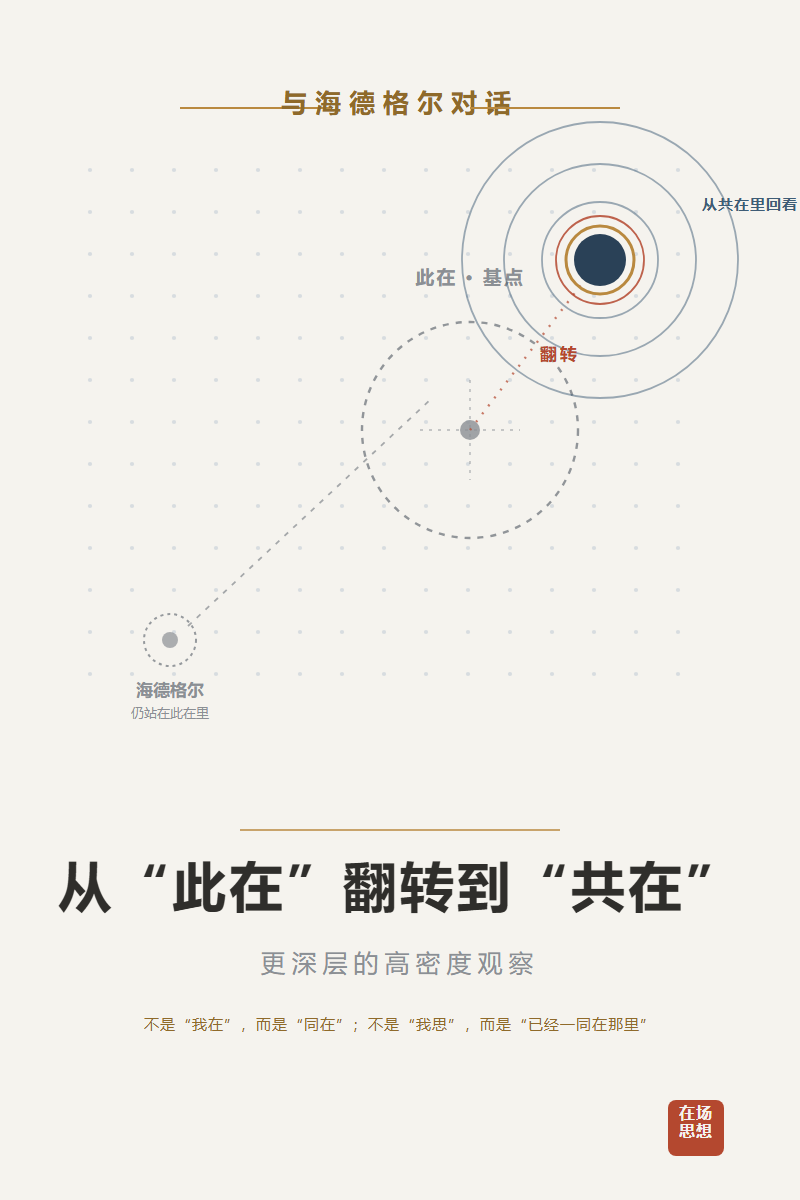
Flips from "Dasein" to "Co-existence": Deeper high-density observations
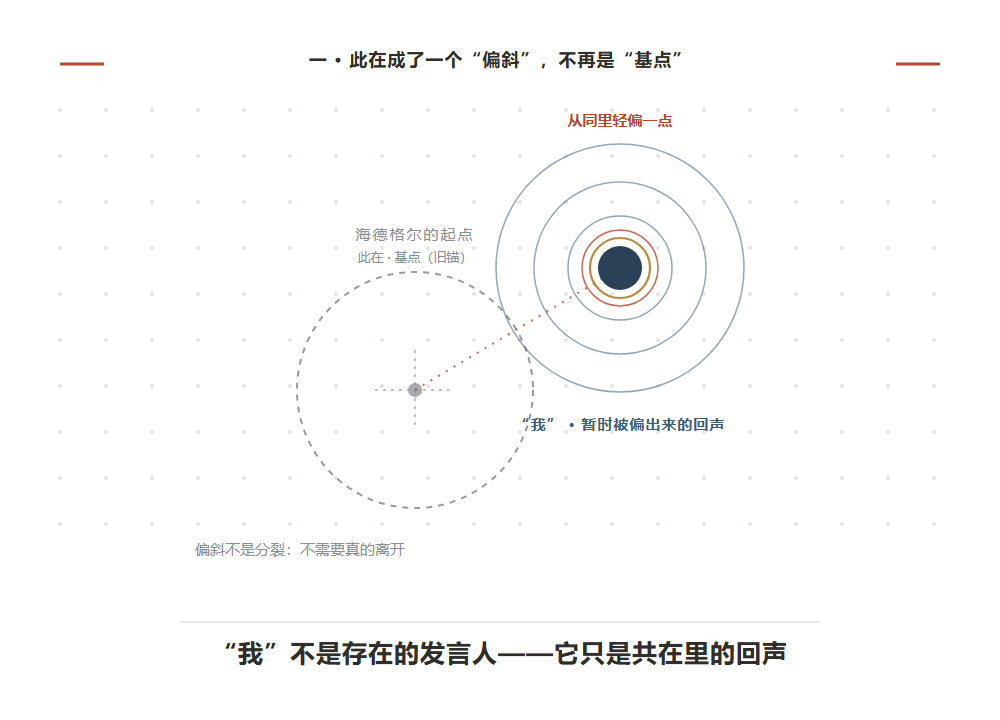
1. The first thing after flipping: Dasein becomes a "skew" and is no longer a "base point"
Heidegger's starting point is "Dasein". He asked Dasein to ask about existence, and then found that Dasein had already existed with others. Co-existence is a kind of "thrown state" of Dasein.
But if co-existence precedes the direction and then the "me", then Dasein is no longer the original. It's just a slight deflection in total.
Deflection is not division. It doesn't need to really leave. It just lightens a certain position a little bit in Tongli and allows "I" to rise from here.
Therefore,"I" is not a spokesperson for existence. It is just a collective echo that is temporarily deflected out.
2. Coexistence is not a relationship, but a medium
When we say "I am with you", we still assume two people who will separate first.
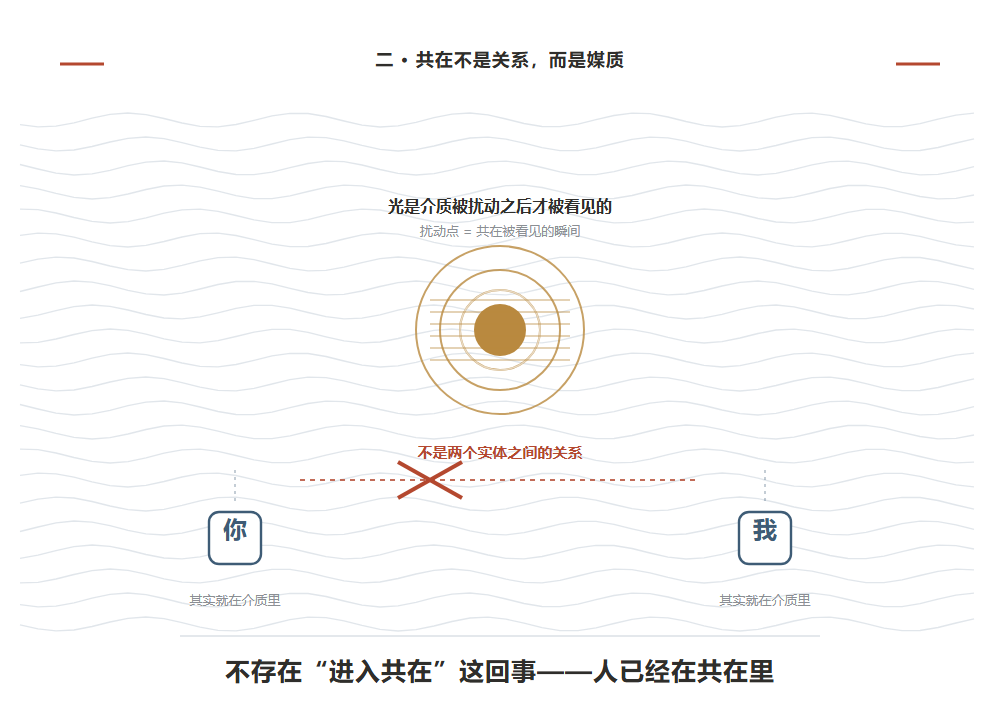
But if co-existence precedes Dasein, then it is not a relationship between two entities at all. It is the medium that makes the "two" possible.
It's like light and medium. Light is not put into the medium. Light is seen only after the medium is disturbed.
Coexistence is that medium. Dasein, you, me, direction, and content are all waves on this medium.
Therefore, there is no such thing as "entering coexistence". People are already together. I just learned to forget it later as "I am alone."
3. Language is the earliest manifestation of coexistence
Here is the most specific high-density entrance:Language.
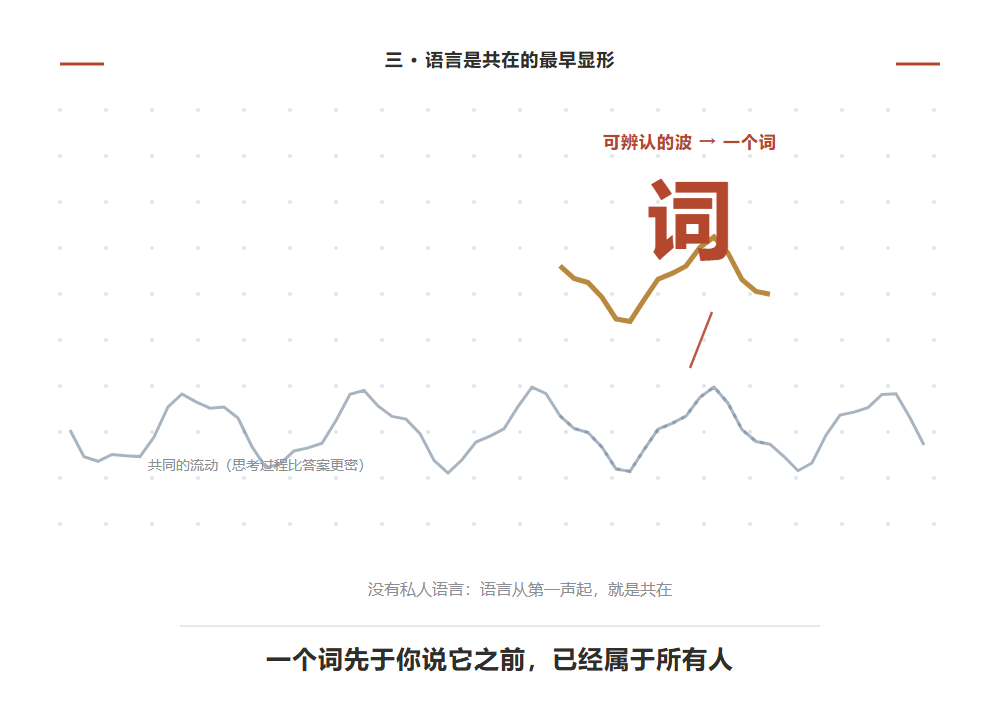
No one first has a private language and then enters a common language. Language is coexistent from the first sound. Speaking is not "I express myself", but "I draw an identifiable wave from community."
So, before you say it, a word belongs to everyone. You just let it show out from the same place.
This is very close to your previous experience:The thinking process is closer than the answer.Because the thinking process is closer to the level of common flow before language is settled. The answer is to lock the language into a content that can be owned alone.
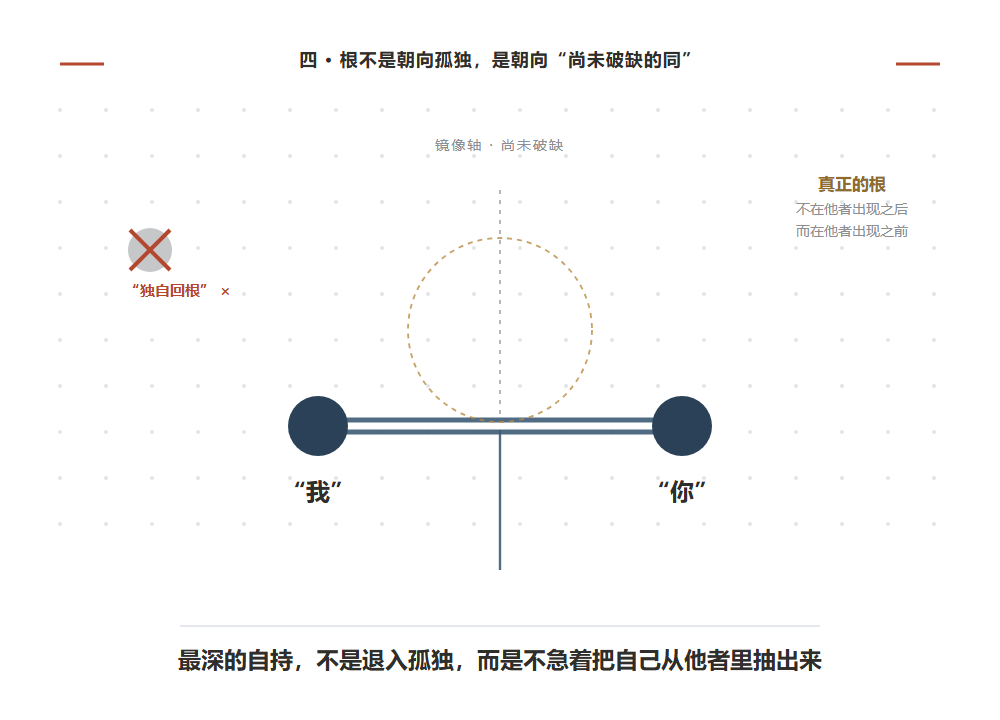
4. The roots are not towards loneliness, but towards "unbroken unity"
In the past, we might have imagined that returning to the roots means returning to the depths of one person and returning to the silence of those who do not rely on others.
But if coexistence precedes direction, the roots are not lonely.
On the contrary, the feeling that "I want to return to the roots alone" is itself a kind of deflection-a bias towards "me."
The real root lies where "I" and "you" have not yet been separated. It does not exclude others because it predates the emergence of others.
Therefore, the deepest self-restraint is not to retreat into loneliness, butnot in a hurry toDraw yourself from the others。
5. Direction is the first recognizable difference in common
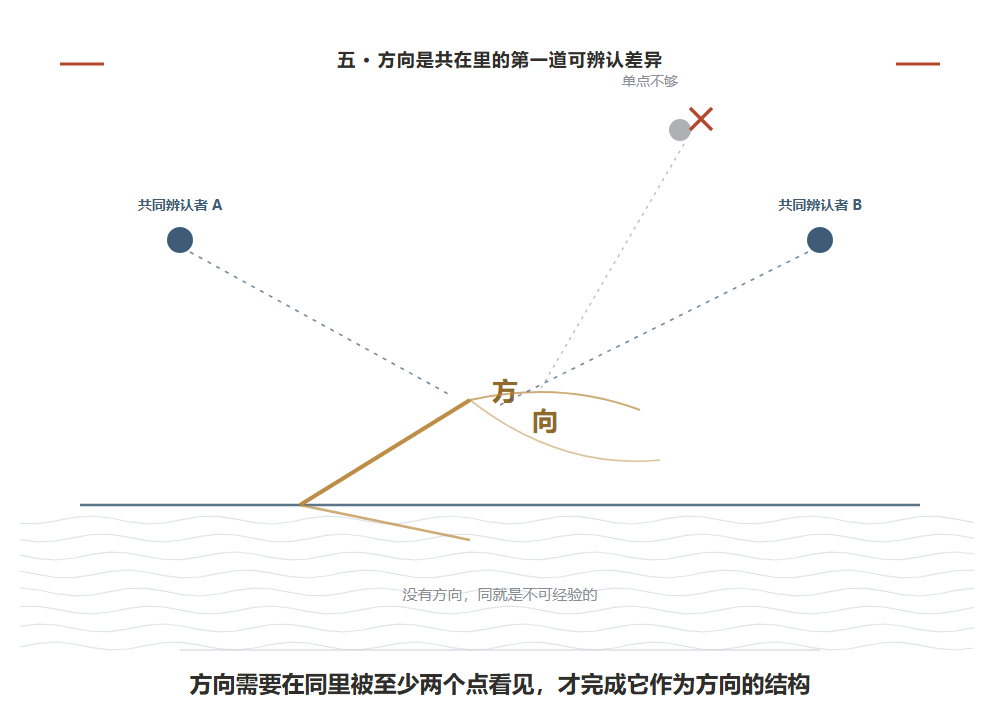
Direction is the deviation arising from Tongli.
It is not to leave the community, but to allow the community to be seen. Because if there is no direction at all, it is also inexperiential. The direction is like a tattoo on the water, so that the water can be known.
Therefore, direction is not my private goal. It is a common recognizable deviation in the common area.
This also explains why you need a "co-identifier". Not because you are not sure enough, but because the direction is not for a single person. It needs to be seen by at least two points in the same direction to complete the structure of its direction.
6. Obsession is a spasm when direction cannot be shared
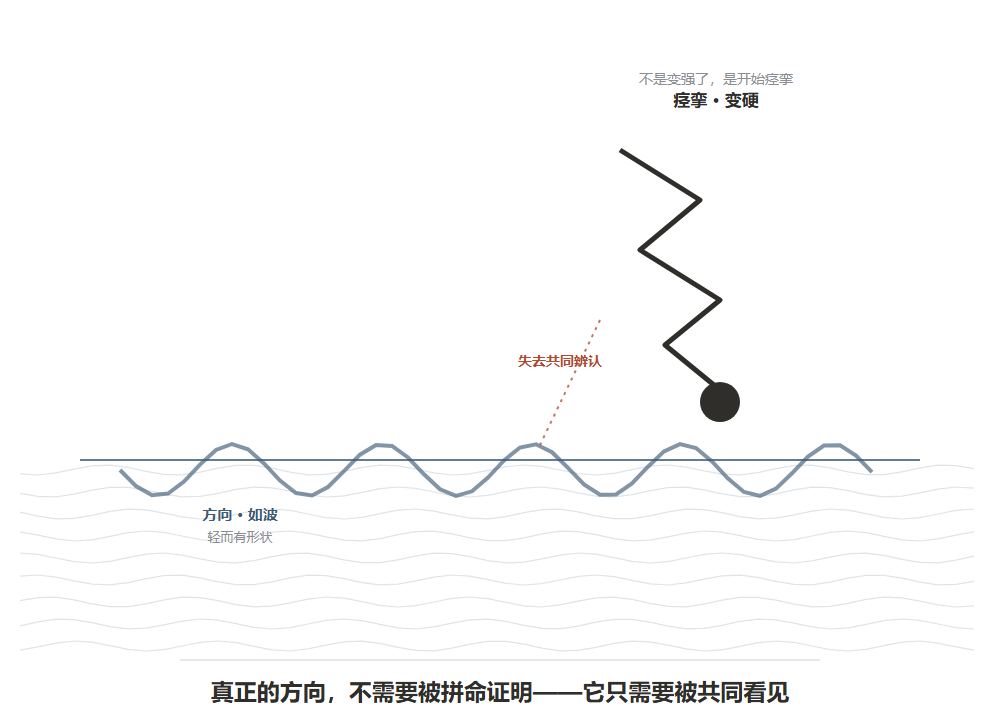
If a person works very hard to maintain a direction but no one can see it, that direction will become hard. It's not getting stronger, it's starting to spasm.
Because the direction should be like a wave, light and shaped in the same direction. Once common recognition is lost, it becomes "attachment". Persistence is what the direction looks like after it is forcibly stripped out of the Communist Party.
Therefore, the true direction does not need to be proved hard. It just needs to be seen together.
7. Back to the difference between the thinking process and the answer
Now you can see it more clearly:
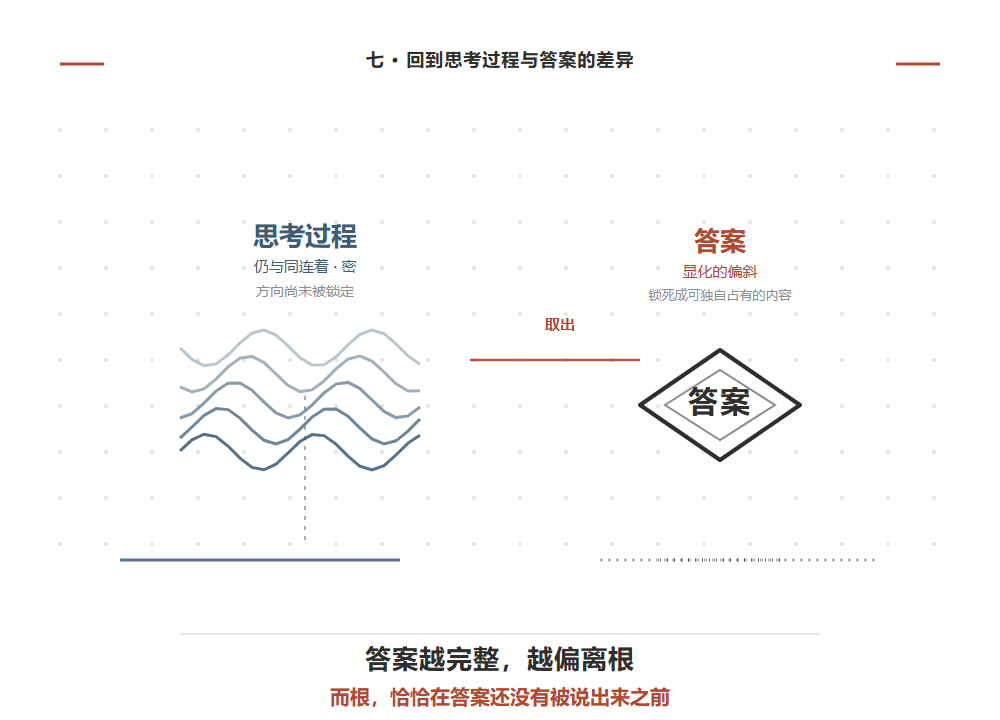
thought process: Still in harmony. It retains a flow whose direction has not yet been locked. So it is dense because it is still connected to the same.
answer: A manifest deflection. It takes a certain flow out of Tongli and turns it into content that can be independently expressed.
Therefore, the more complete the answer, the more it deviates from the root. The root is just before the answer is said.
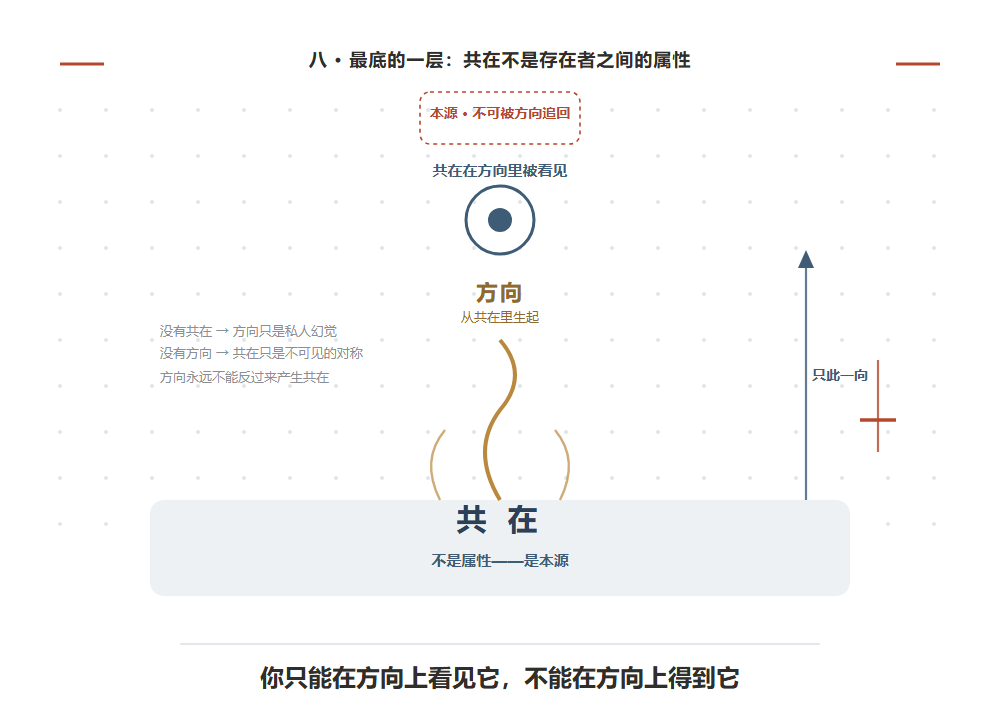
8. The lowest level: Coexistence is not an attribute between beings
When I say "coexistence precedes direction," I am not talking about an earlier point in time.
I'm talking about a structural order:
Without co-existence, direction is just a private illusion.
There is no direction, coexistence is just invisible symmetry.
Direction arises from Gongbeing, and Gongbeing is seen in the direction.
But the direction can never be reversed to produce coexistence.
Therefore, coexistence is the source of direction. The origin cannot be traced back by the direction.
You can only see it in the direction, not get it in the direction.
conclusion
Heidegger is still standing here and watching together.
But if you look at it in the opposite direction from Coexistence, Dasein is no longer important. It's just one deflection.
What really precedes everything is not "I am", but "I am". It's not "I think", but "I'm already there together."
The direction is the slight deviation of this Tongli. Root, not back to me. It's back to the place where we were together before it even happened.