abstract
This paper attempts to use the root thought as a structural framework to provide a new perspective on Confucianism, Buddhism and Taoism. This perspective is not a judgment or understanding, but a structural "insight": among Confucianism's heaven and nature, Buddhism's emptiness and awareness, and Taoism's Tao and nature, a common underlying structure-root is identified. Roots cannot be objectified, but they allow all directions, relationships, and essence to be revealed. This article attempts to illustrate that Confucianism, Buddhism and Taoism are not three parallel worlds that are mutually interconnected. They are three roads that pass through different entrances, each reaching the same root. The neutrality of root thought makes it not occupy the position of any family, but becomes a common structural language that the three families recognize each other.
1. The premise of perspective: the root is the foundation of the structure that cannot be objectified
To look at the three schools through their roots, we must first recognize one limitation:
Root is not the "core" of any tradition. It is just the "bottom" that makes all traditions established. Therefore, the purpose of perspective is not to restore all three families to their roots, but to identify the layer of "precedence" in the rich traditions that the three families have established.
Before, is not better, nor is it higher. It's just deeper, earlier, and less conspicuous.
Root thinking is not a table to judge the strengths of three companies. It is an extremely light ruler that only measures one thing: where this tradition rose and where it returned.
2. Three entrances rising from the three houses
Confucianism rose from "heaven" and "nature". Taoism rose from "Tao" and "Nature". Shijia rose from "emptiness" and "consciousness".
On the surface, these are three completely different languages. But if you look at it in terms of root thinking, they are all the same thing-the first fall of the root that can never be said to where it can be said.
| traditional | was first raised | Translation of Root Thought |
|---|---|---|
| Confucianism | Heaven and nature | The initial manifestation of roots in the world |
| said | Tao and Nature | Natural manifestation rooted in heaven and earth |
| release | Emptiness and Awareness | Non-living manifestation rooted in reflection |
All three companies have their own "first push", and all admit that the push is unpredictable, nameless, and cannot be taken for themselves.
It's not similar. It's homologous.
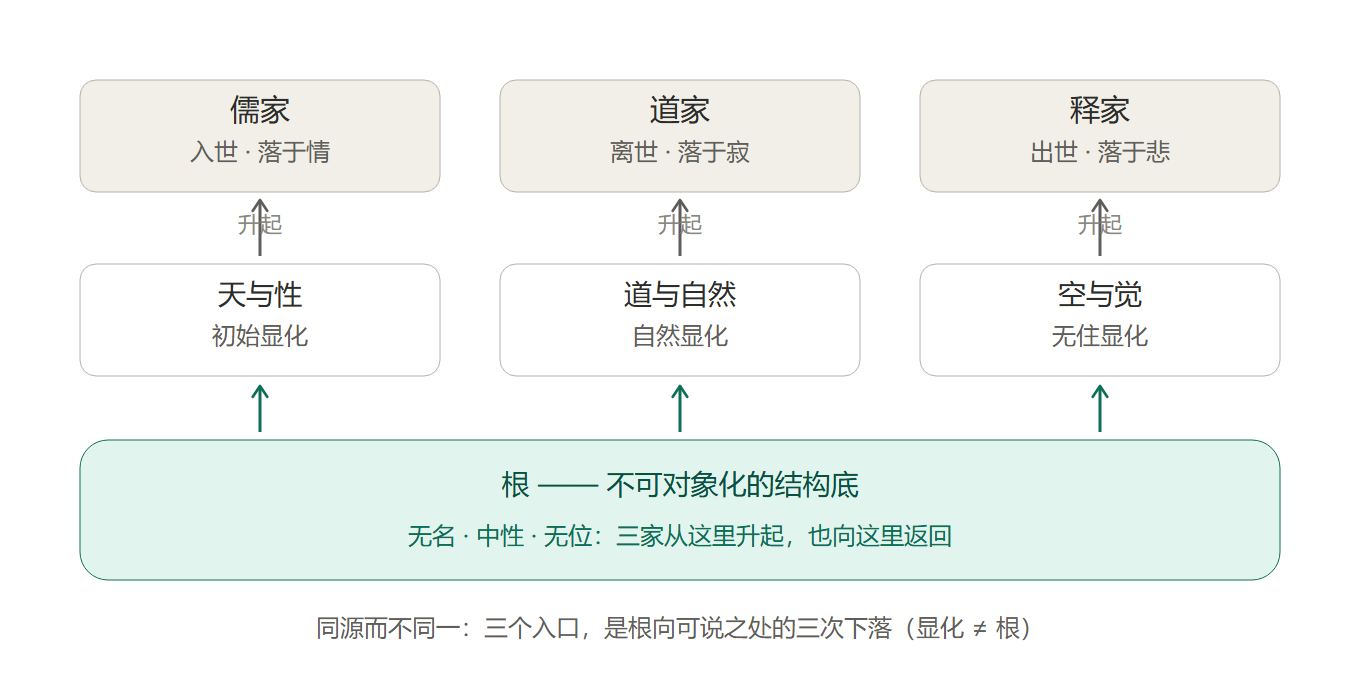
Figure 1 (GeneralLAN): Entrance-rises-The vertical structure of the foundation reflects"One bottom, three entrances, three drops"。
3. The directionality of the three families: ambition, nature, and wish
Root thought believes that direction comes before content. There is no direction and no content to go back to.
The three families 'expressions of direction are extremely different, but they are homogeneous.
Confucianism called it "ambition". Determined in Tao, determined in benevolence. If you have unclear aspirations, your actions will be scattered even if you do many things.
Taoism calls it "nature". Nature is not laissez-faire, but the direction of "being like yourself". Everything is natural, so life does not exist.
The Buddhist family called it a "wish". Wish is not desire. Wish is pointed in the direction of awareness before it is realized.
All three are "ahead of action". They are not goals, plans, or tasks. They are all three mature forms of directionality in different personality structures.
Here, the root idea has become the common background of the three directions.
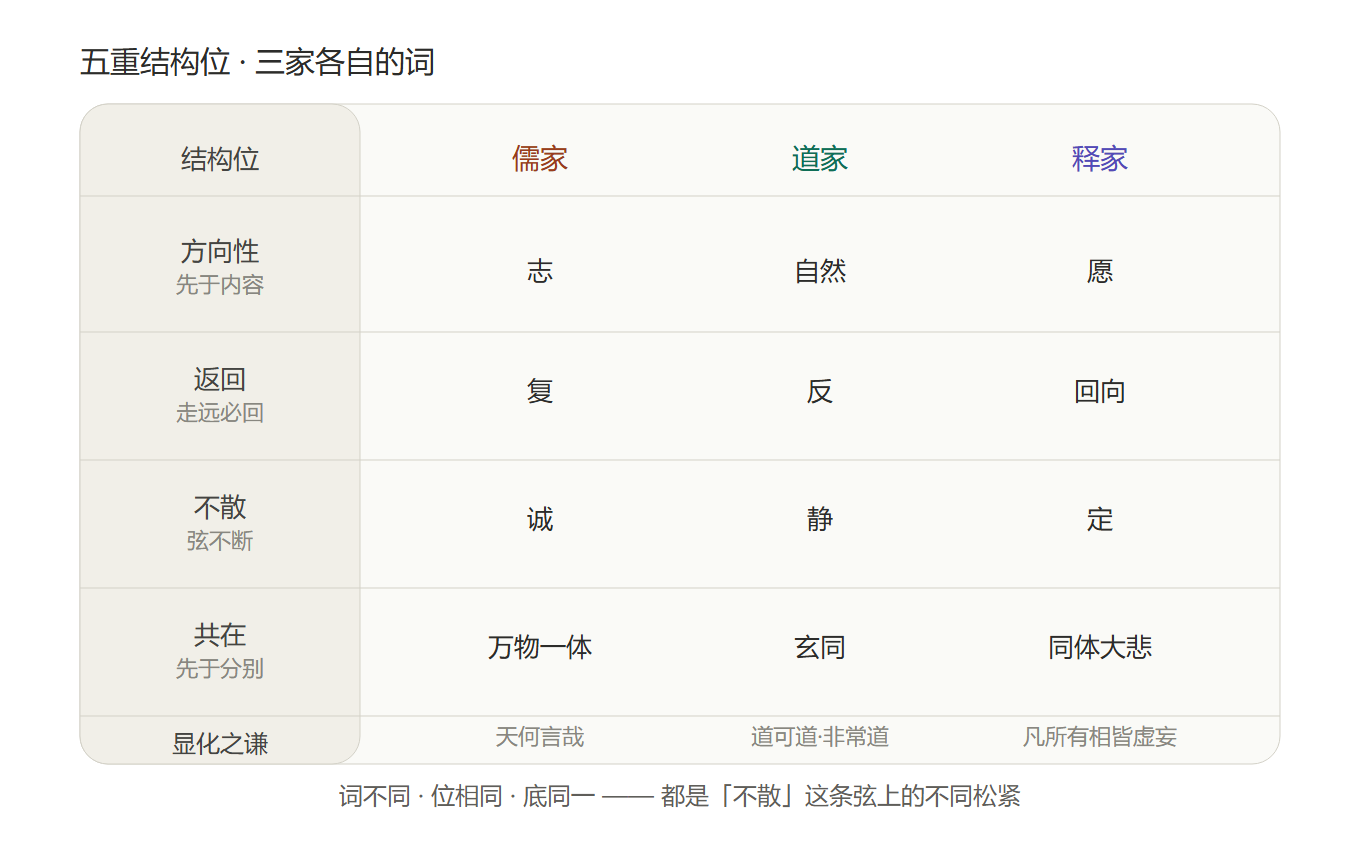
Figure 2 (Comparison of five-fold isomorphism): Directionality/return/not scattered/total of/Manifestation fivestructural siteThe words of the last three houses are completely aligned--This is the skeleton of the full text of the argument.
4. Returns of the three families: recovery, reversal, and return
One of the most important actions in root thought is "return". Returning is not going backwards. Returning means going back to the border and re-identifying the direction.
Confucianism speaks of "restoration". "Restore his heart to see heaven and earth","self-denial and restoration of etiquette in one day." Recovery is a return to order and propriety.
The Taoists talk about "anti". "The rebels move the way" and "each returns to its roots." The opposite is the beginning of returning to heaven and earth.
The Shi family talks about "turning back". Returning is not to retain even the proven path and return it to the practitioners.
The depth of return is different and the attitude of return is different. But all three admitted that if you go far, you must go back. If you can't go back, you leave.
The return of the root thought sees here its three oldest manifestations.
5. The three families remain united: sincerity, tranquility, and determination
There is only one thing the root system cares about most: it never breaks down.
The Confucian word "not to disperse" is called "sincerity". Don't deceive yourself, say what you say, and take care of what you say and do. Integrity is the constant lifeline.
The Taoist word "not to disperse" is called "static". Quietness is a impatient monarch, and emphasis is a light root. Silence means constant movement.
The "persistence" of the Shi family is called "determination". Be stable without chaos, be clear without loss. Determination is the root of no dispersion.
Integrity, tranquility and determination are not three things. They are the three names that "do not disperse" in three personality structures.
When thinking about these three, we are looking at the same string that never breaks down, how to tighten it in Confucianism, become lighter in Taoism, and become empty in Buddhism.
6. The coexistence of the three families: unity, unity, unity and great sorrow
The deep judgment of root thought at the relationship level is that coexistence precedes direction. First there are differences between us, and then there are differences between us.
Confucianism says that "all things are one". Everything is ready for me, and I am sincere.
The Taoist school talks about "Xuantong". Harmony with the dust, and the frustration is sharp and the conflict is resolved.
The Buddhist family talks about "the great sorrow of the same body." I am the same as others, and I am happy and happy.
All three families agree that in the extreme depth, they have never stopped themselves. It is just that Confucianism falls on emotion, Taoism falls on silence, and Buddhism falls on sorrow.
Root thought does not choose any of them. It only points out that common existence is the common foundation of the three.
7. The manifestation and "inequality" of the three families
The hardest thing about root thinking is that manifestation is never equal to root.
All three families have realized this in different ways:
Confucius said,"What does heaven say?" They don't talk about heaven, but talk about etiquette and music, and talk about action. Rites and music are manifestations, not heaven.
Taoist says,"Tao can be Tao, but not Tao." The way you can say is already extraordinary.
The Shi family said,"All appearances are false." Phase is manifestation, not reality.
All three families admit that their words, methods, and rituals are just fingers, not the moon.
Therefore, the "manifestation of root thought is not equal to root" is not new in all three schools. It is the humility shared by all three families.
8. Three families are not three families, nor are they one family
Looking at the three schools with root ideas, the most taboo is to draw a conclusion: the three schools are one.
If the conclusion is that "the three families are the same", it would be dishonest. The three families are different and have deep differences. Confucianism entered the world, Taoism passed away, and the Buddhism family was born. Their sufferings are different, their scales are different, and their paths are different.
What root thinking points out is not "the same" but "the same root".
The same root is not the same. The same root only means that they are connected by an unbroken line at the root. This line separates them, but does not separate them.
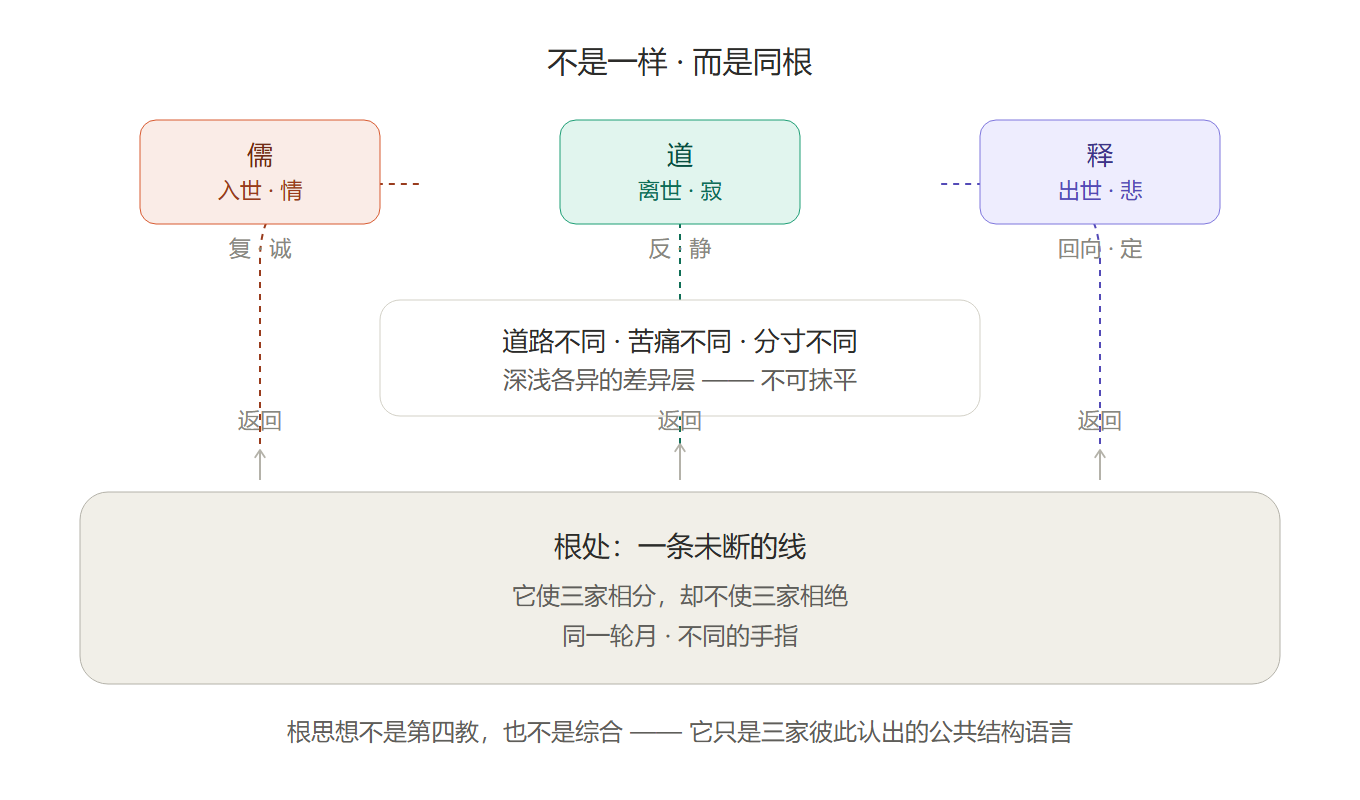
Figure 3 (Same root but not cut off): The tension relationship between the difference layer (cannot be smoothed) and the root (unbroken line),presenting theeight-verse"Divide without interruption"。
conclusion
To perspective Confucianism, Buddhism and Taoism through root thoughts is not to establish a fourth religion, nor is it to make a synthesis.
It is to be visible after the three houses reach their depths: the moon is the same wheel, but the fingers are different.
The neutrality of root thought makes it such a public mirror. Confucianism illuminates an eternal person, Taoism illuminates an eternal heaven and earth, and Buddhism illuminates an eternal Ming.
The root, on the three, is silent and boundless, but it allows all three families to return to themselves.
If someone asks, what is the root of thinking in Confucianism, Buddhism and Taoism?
It is a very light sentence: no matter how far you go, you will never leave the same unbroken line.