abstract
The central feature of root thought is an unusual neutrality. This neutrality is not an absence of values, but a structural restraint: it does not propose any concrete idea of good, it does not give priority to any particular tradition, it does not turn the root into an ideology. This restraint enables root thought to become a structural medium for common identification between different thought traditions, such as Confucianism, Buddhism, and Taoism, without annexing or replacing them. At the same time, this neutrality also means that root thought does not directly participate in the adjudication of power issues and ethical struggles. This paper demonstrates that only by consciously undertaking this "structural restraint" can Root Thought truly move towards modernization: it does not become a new system of truth, but becomes a common ground that remains unbroken between different systems and can return to itself in operation.
1. Introduction: What is a "neutral" idea
In the modern ideological atmosphere,"neutrality" is often seen as indifference, non-intervention, or lack of stance. However, in the context of root thinking, neutrality is not the case.
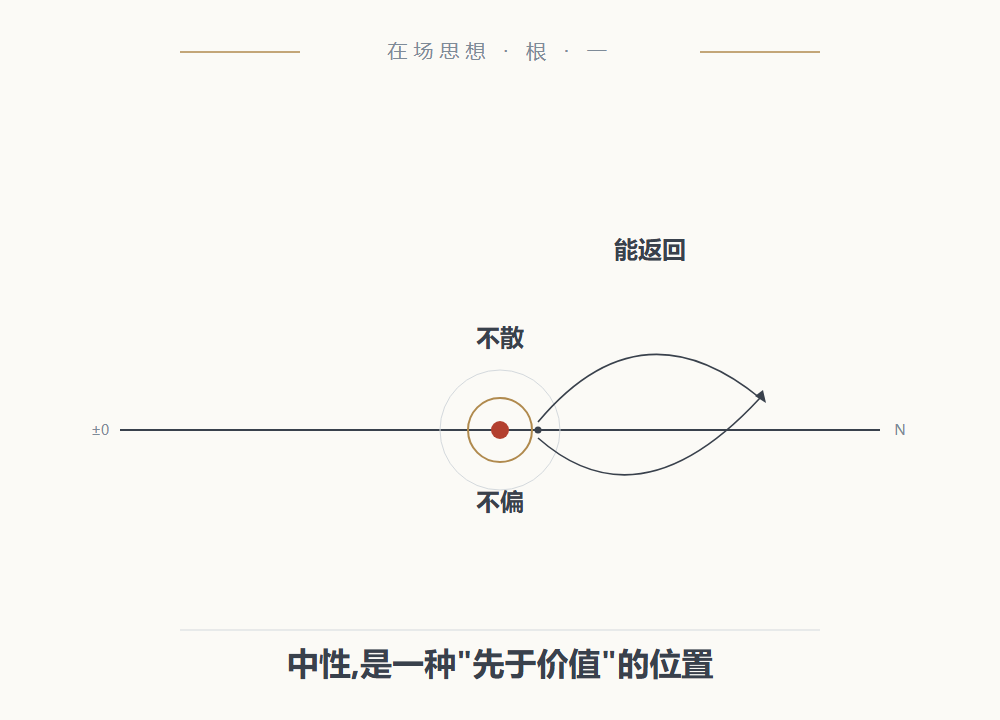
The neutrality of root thought is not indifference to good and evil. Rather, it does not first propose a specific set of standards of good and evil. It does not ask "what kind of person you want to be" or "where you must go." It only provides one structural condition: it is not scattered, not biased, and can return.
This neutrality is a position that "precedes value". It does not stand in the middle of values, but holds the possibility of "divisible but not dispersed" before values are differentiated.
2. What is the neutrality of roots
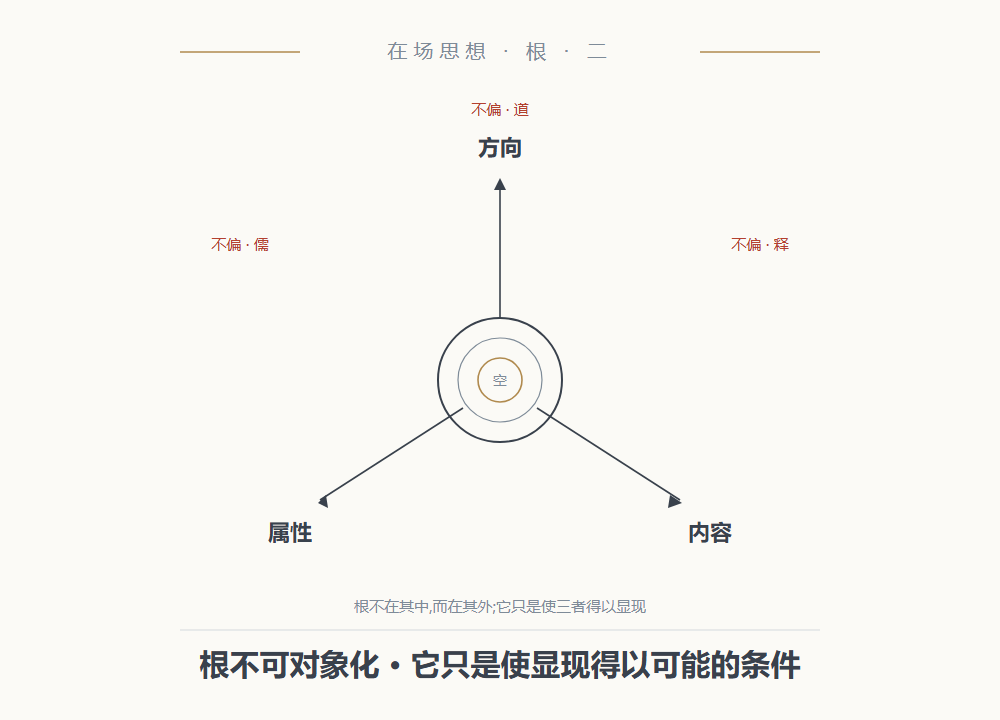
Roots cannot be objectified. It has no direction, attributes, or content. It is only a condition that allows direction, attributes and content to be revealed.
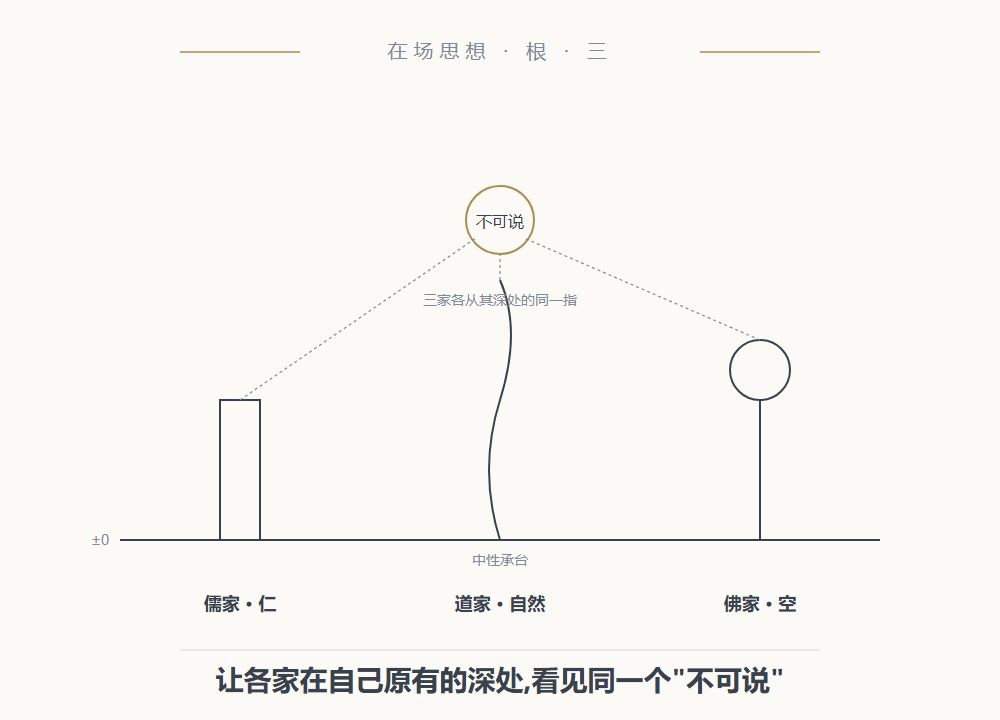
Therefore, Gen naturally rejects any arbitrary "good". It does not favor Confucian benevolence, Taoist nature, or Buddhist emptiness. It can be pointed to at the same time in three traditions, but it does not belong to any one family.
This neutrality gives Root Thought a unique advantage: it does not compete with others for direction. It only asked: Are you still scattered? Can you still go back?
Therefore, the neutrality of root thought is not indifference, but a kind of restraint to "not act as a mentor."
3. The first function of neutrality: not seizing tradition
If root ideas want to go public, the first difficulty is not to be rejected, but to be absorbed.
If root thought is biased towards Confucianism, it will become a moral cultivation system; if it is biased towards Taoism, it will become a natural wisdom of life; if it is biased towards Buddhism, it will become a legal meaning for observing the void.
If Root Thought wants to have a dialogue with different traditions today, it must avoid this kind of absorption. It cannot allow itself to become a modern supplement to a traditional family. It must always be only an intermediate layer: let each family see the same "must-say" in its original depth.
This is the neutrality of "not seizing tradition". It is not that we do not respect tradition, but that we do not replace the most precious thing of any tradition in the name of roots.
Fourth, the second function of neutrality: no replacement value
Root thought is systemically "ignorant of good and evil". The "ignorance" here is not ignorance, but "not making a final verdict."
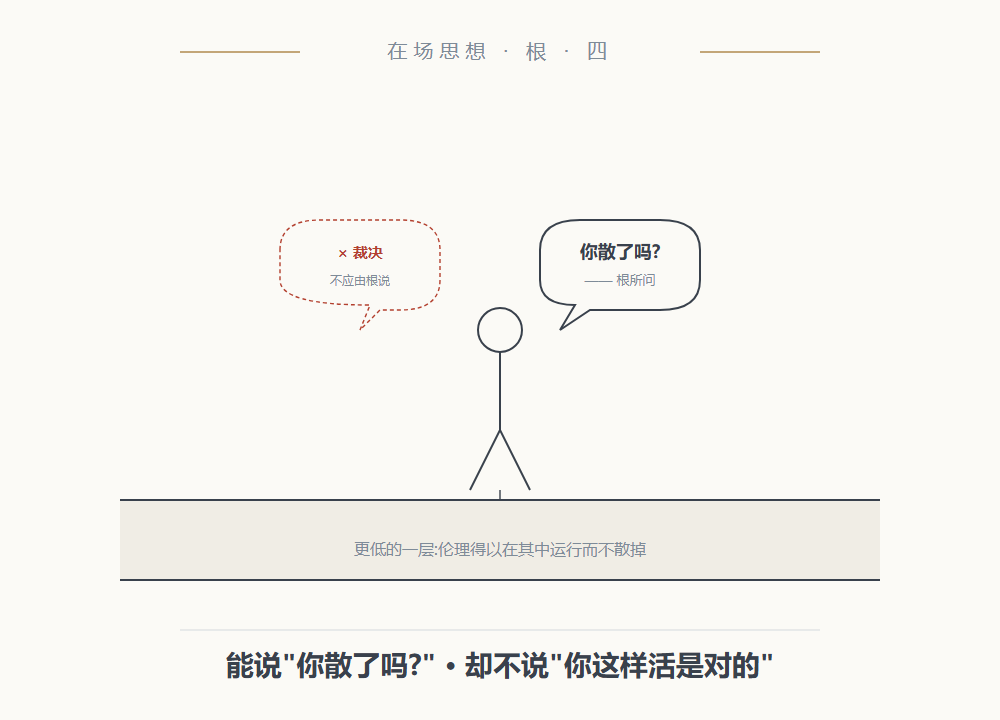
Root thought can say: "Are you scattered?" But it cannot say: "You are right to live this way, but wrong to live that way."
This is not because root thinking is useless, but because it recognizes its own boundaries. It is not a complete ethical system. It is just a lower layer in which ethics can operate without being dispersed.
Therefore, if root thought is regarded as the criterion of good and evil, it has crossed the line. Its real responsibility is to help people return to a position where value judgments can still be made without being stiff while making judgments.
V. Neutral risk
This neutrality will inevitably bring costs. The biggest risks are:It may be interpreted as not caring, not interfering, and not being responsible.
In a world where the struggle between good and evil is extremely fierce, a system that only talks about "staying together" and not "what is good" will be seen as weak or even as evasion. Especially when injustice comes, the neutrality of root thought seems to do nothing.
This criticism is real. The root thought must face it, rather than avoid it with the saying that "the root cannot be said".
The response can only be as follows:
Root thought does not replace people in making judgments about good and evil, but it cannot be reduced to an excuse for "never judging".
Neutral root ideas cannot be a refuge for power and injustice.
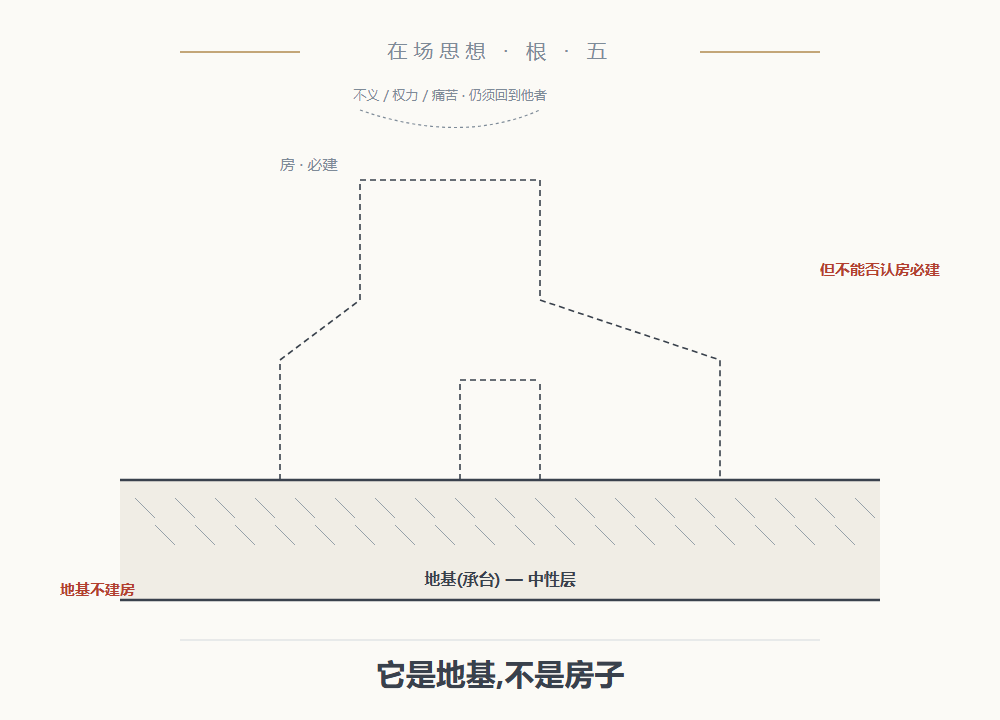
Even if one returns to the roots, one must still return to the other, pain, history and responsibility.
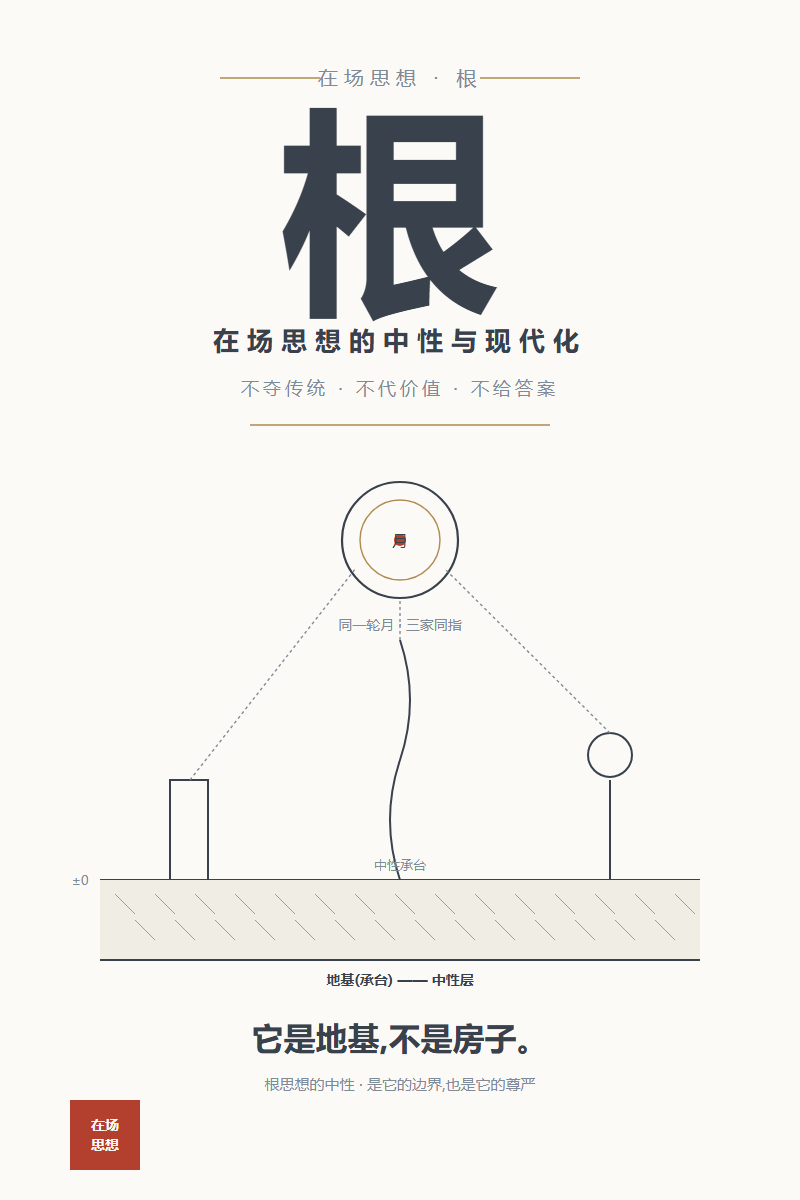
Therefore, the neutrality of root thought must be accompanied by a boundary awareness: it is the foundation, not the house. There is no building on the foundation, but it cannot be denied that houses must be built.
6. The third function of neutrality: providing public space for joint identification
The reason why root thought can become the common point of Confucianism, Buddhism and Taoism is because it is neutral.
If it is already biased towards Confucianism, Buddhism will not recognize it. If it is biased towards interpretation, Taoism will not recognize it. If it is biased towards Tao, Confucianism will not recognize it.
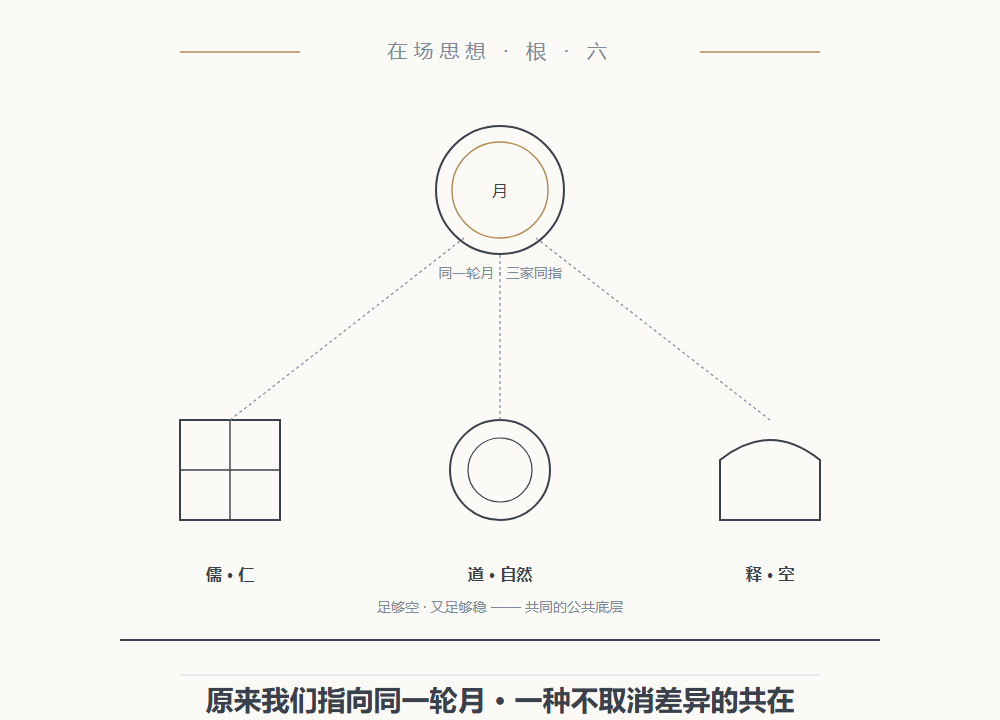
Only when it remains empty enough and stable enough can the three families jointly identify it: it turns out that we are pointing to the same moon.
Therefore, the neutrality of root thought is not to create a Protestant sect, but to allow long-existing traditions to see each other deeper. This kind of seeing is not convergence or unification, but a kind of coexistence that does not cancel differences.
7. Modernization: How root ideas entered today
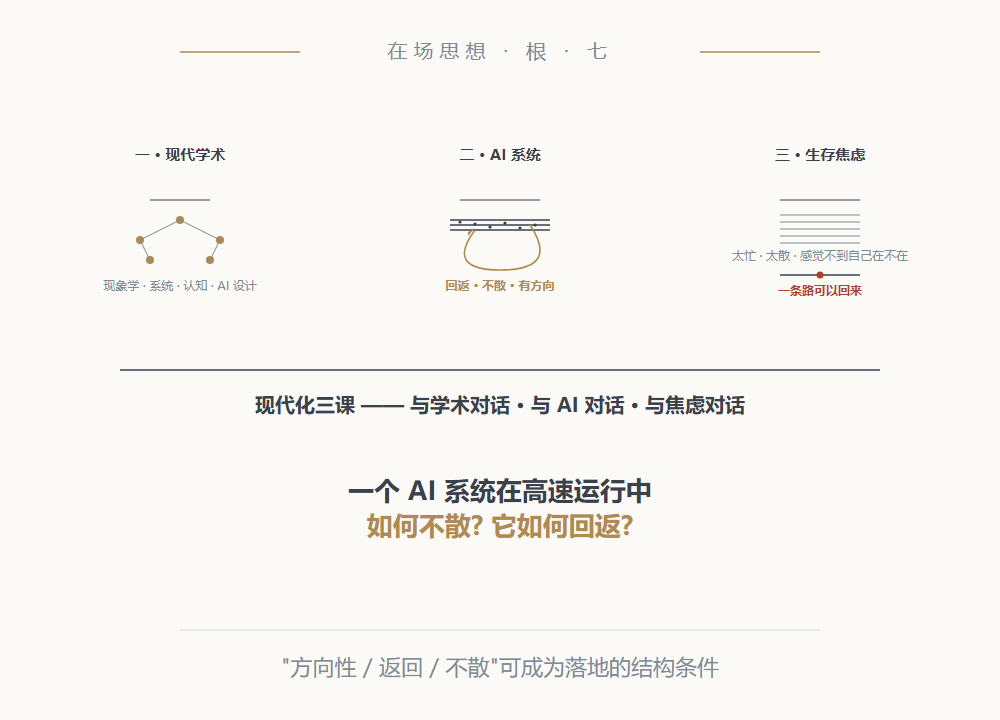
If Root Thought wants to truly live in modern times, it must complete several modern lessons.
1. Dialogue with modern academia
It must be able to enter discussions of phenomenology, systems theory, generative cognitive science, and even AI system design, rather than just as an appendix to Eastern thought.
2. Relationship with modern technological systems
The most decisive thing in the modern world is no longer the metaphysical tradition, but large-scale computing, self-sustaining systems, and generative models. The root idea must ask: How can an AI system not disperse during high-speed operation? How does it return? Is it possible for it to know what it is heading towards?
The "directionality","return" and "persistence" of root ideas may become structural conditions that can be implemented in these systems. This is its most difficult road to modernization.
3. Connected to modern people's survival anxiety
The pain of modern people is not necessarily "no direction", but "too busy and scattered, unable to feel whether you are there or not."
Root thinking does not need to teach them how to succeed, but it can provide a very low, very true position:You haven't completely dispersed yet. You still have a way back.
In an era of accelerating technology, this kind of reminder may be closer to people's real needs than any "how to succeed" system.
8. Conclusion
The neutrality of root thought is its boundary and its dignity.
It does not usurp tradition, does not represent value, and does not give answers. It only holds it deep: it never escapes, it can return, and it can point to the same with those who are different.
This neutrality gives it the opportunity to become the public bottom at the intersection of Confucianism, Buddhism and Taoism. It also makes it unnecessary to cater to any outdated or radical stance at the expense of its roots in modernity.
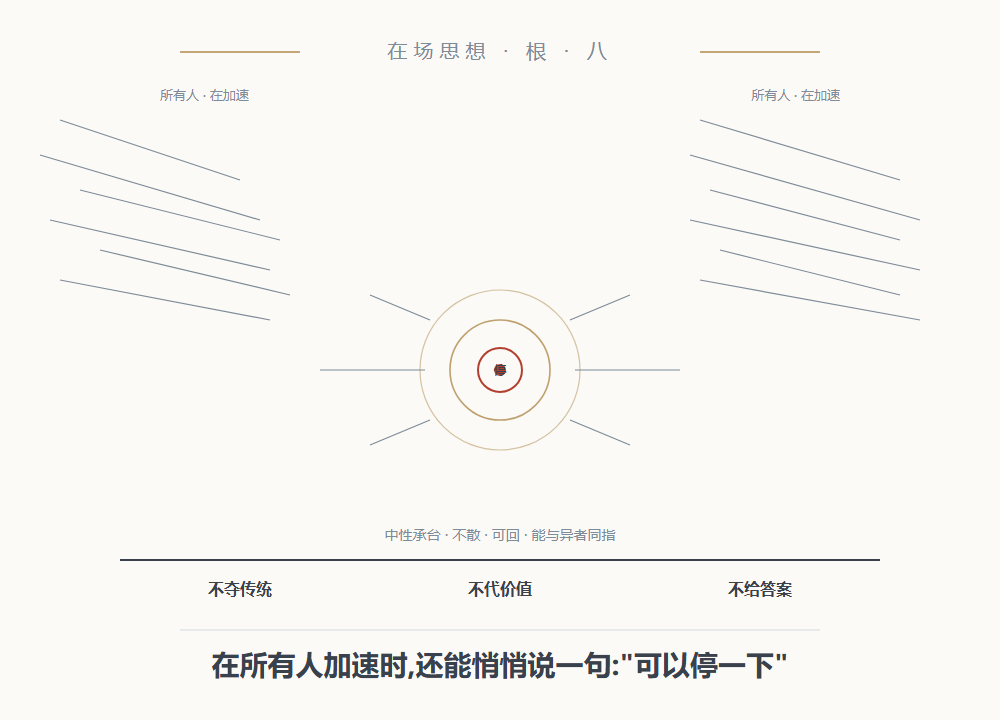
Root thinking will not therefore become a doctrine to save the world. It will only be the position where you can quietly say,"You can stop" when everyone accelerates.
In this era when it is no longer easy to stop, this neutrality may be the most modern and important force of root thought.